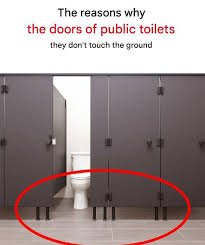
Public restrooms must be designed to discourage:
-
Vandalism
-
Overnight sleeping
-
Drug use
-
Dangerous or inappropriate behavior
The lower gap makes these activities harder to hide because:
-
People outside can see if someone is inside too long
-
Suspicious behavior becomes visible
-
It adds a level of accountability
The open design helps keep public restrooms safer overall.
5. Helps In High-Traffic Situations
Have you ever waited in line for a restroom, not knowing whether a stall is free? The gap under the door helps solve this problem.
You can simply look for:
-
Feet
-
Shadows
-
Movement
This way, you know immediately whether the stall is empty. In busy locations like airports and events, this small feature reduces frustration and keeps the line moving faster.
6. Cheaper and Easier to Install
Full-length doors cost more money and require:
-
Stronger materials
-
More precise measurements
-
More expensive hinges and frames
Public restrooms need solutions that are:
-
Durable
-
Affordable
-
Easy to replace
Doors with gaps are:
-
Cheaper to build
-
Easier to install
-
Less likely to get damaged
This makes them perfect for locations with heavy daily use.
7. Prevents People From Getting Trapped Inside
Getting locked inside a bathroom stall is frightening, but it’s also avoidable with stall doors that don’t reach the floor.
If the lock jams, a person can:
-
Crawl out through the gap
-
Ask for help
-
Be spotted easily
Without the gap, maintenance staff might have to break the door to free someone, which takes time and causes damage.
8. Easier Maintenance and Repairs
Public restroom doors endure:
-
Heavy use
-
Moisture
-
Impacts
-
Frequent slamming
Because of this, repairs are common.
A door with a floor-to-ceiling design requires:
-
More parts
-
More complicated repairs
-
Higher maintenance costs
Stall doors with gaps are simpler and more durable. If something breaks, it’s easier and cheaper to replace or repair.