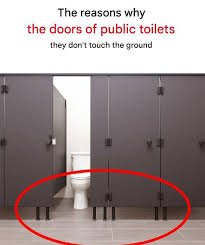
If you’ve ever walked into a public restroom and wondered why the stall doors don’t reach the floor, you’re not alone. Millions of people notice this unusual design, but few understand the real reasons behind it. While it may seem strange, the “gap” at the bottom of bathroom stall doors is not an accident. It’s intentional—and it actually solves a lot of common problems that public spaces face.
In this article, we break down the most important reasons why public restroom doors are designed with a gap underneath, the benefits this offers for safety, cleanliness, and efficiency, and why this design is unlikely to change anytime soon.
1. Faster and Easier Cleaning
One of the biggest reasons restroom doors don’t touch the floor is simple: cleaning becomes much easier and faster.
Public bathrooms get dirty quickly because:
-
Hundreds of people use them
-
Water and paper end up on the floor
-
Cleaning staff need to move fast
The gap at the bottom allows cleaning teams to:
-
Sweep floors without opening each stall
-
Flush out dirt with water
-
Mop quicker and more efficiently
In high-traffic areas like malls, airports, schools, and restaurants, saving time during cleaning is essential.
2. Better Ventilation and Odor Control
Public restrooms need as much air circulation as possible. The gap under the door creates better airflow, which helps:
-
Reduce unpleasant smells
-
Keep the space cooler
-
Prevent humidity from building up
Without these gaps, stalls would trap odors and make the entire restroom uncomfortable. The extra airflow helps keep restrooms fresher, even when many people use them back-to-back.
3. Increased Safety in Emergencies
One of the most important reasons for the gap is safety.
If someone slips, faints, or experiences a medical emergency inside a stall, the gap makes it:
-
Easier for others to see there’s a problem
-
Possible to reach the person without breaking the door
-
Faster for staff to provide help
In an emergency, every second counts. The gap allows people to quickly check on someone who may need assistance.