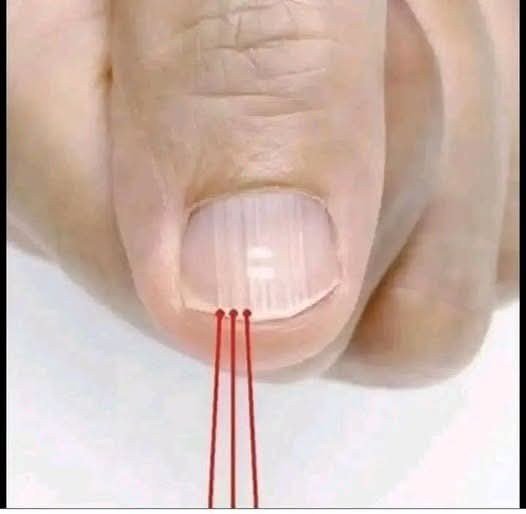
Doctors highlight that nail lines can also reflect nutritional gaps. Your body uses vitamins and minerals to build strong nails, and deficiencies can cause ridges, dryness, or changes in appearance.
Some nutrient-related signals include:
• Low Iron
Nails may develop ridges or become thinner and more fragile.
• Low Protein Intake
Because nails are made of keratin (a type of protein), low protein in your diet may affect nail strength.
• Low B Vitamins
These vitamins help support nail growth. Deficiencies may cause slow growth or texture changes.
• Low Zinc
This mineral plays a role in cell repair. A lack of zinc may show up as uneven nail texture.
These signals don’t mean something serious is happening, but they can be helpful reminders to maintain a balanced diet.
4. Lines Caused by Daily Habits
Sometimes lines on the nails are simply the result of daily life. Many Americans use their hands constantly—typing, cleaning, cooking, or handling tools. Frequent hand contact with water or chemicals can dry out the nails.
Common habits that influence nail texture include:
-
Excessive use of hand sanitizers
-
Nail biting
-
Applying acrylic nails or gel polish often
-
Using strong detergents without gloves
-
Cold, dry weather
When the nails repeatedly lose moisture, they may form fine ridges or appear rougher. A simple change—like applying hand cream or wearing gloves for cleaning—can make a big difference.
5. Stress and Nail Growth
Stress influences many parts of the body, including nails. When you go through a period of emotional or physical stress, your body redirects energy to essential functions. Nail growth may slow down temporarily, creating lines or uneven surfaces.
These stress-related lines are harmless, but they serve as reminders that the body needs rest, balance, and recovery.