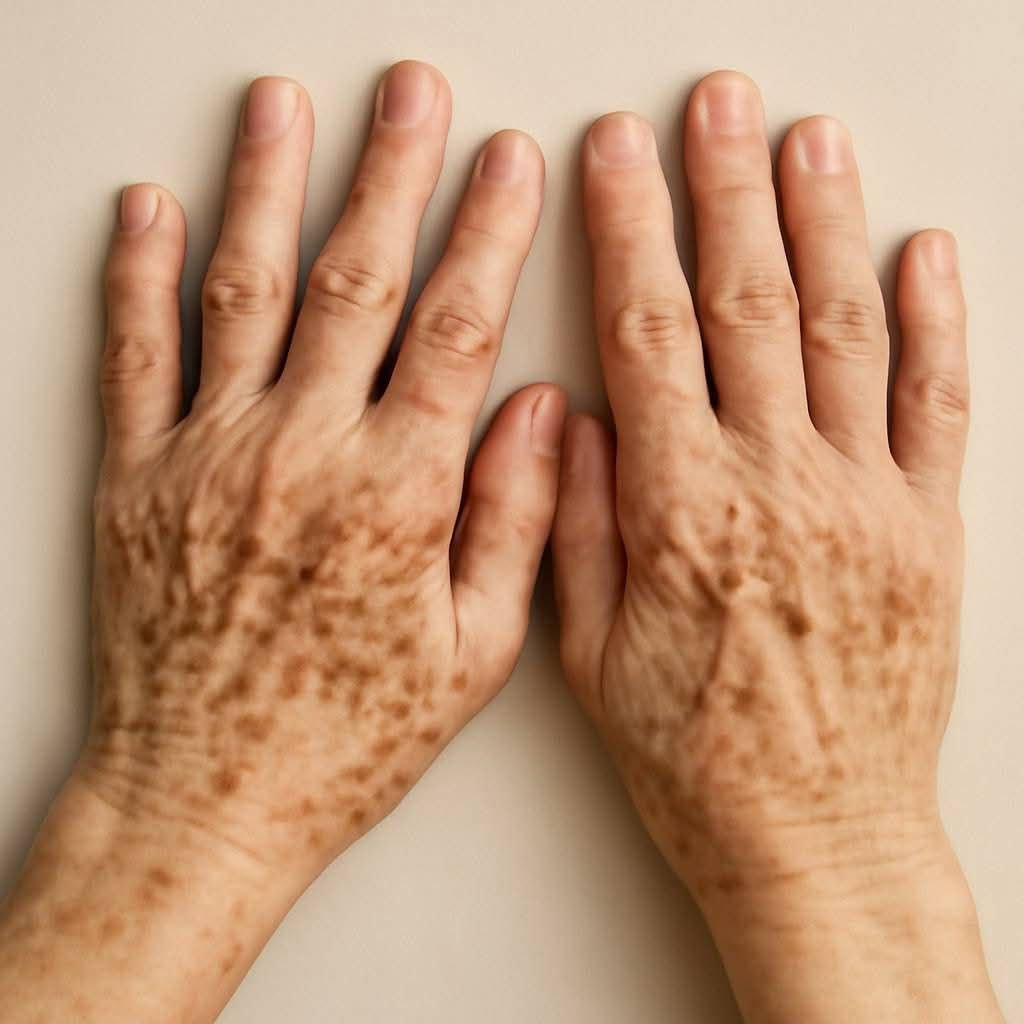
Some nutrient deficiencies can cause pigmentation changes or spot-like marks on the hands.
Possible deficiencies include:
-
Vitamin B12
-
Vitamin D
-
Iron
-
Folate
These deficiencies can cause the skin to appear blotchy or uneven. If your spots come with fatigue, dizziness, or weakness, it may be worth checking your nutrient levels.
4. They May Be a Sign of Aging Skin
Sometimes, spots simply mean one thing:
Your skin is getting older.
As the body ages, the skin becomes thinner, more sensitive, and more prone to pigmentation changes. These age-related spots are extremely common and usually appear on areas frequently exposed to sunlight, such as:
-
Hands
-
Forearms
-
Face
-
Shoulders
While harmless, they can be lightened with dermatological treatments if desired.
5. They Could Indicate an Allergic Reaction
If the spots on your hands are:
-
Red
-
Itchy
-
Raised
-
Suddenly appearing
…they might be caused by contact dermatitis. This happens when your skin reacts to something you touched. Common triggers include:
-
Cleaning products
-
Detergents
-
Metal jewelry
-
Latex gloves
-
Plants
In this case, the spots usually fade once the irritant is removed.
6. They Might Be Linked to Poor Circulation
Some people develop dark or bluish spots on their hands because of reduced blood flow. Poor circulation can cause discoloration, especially in cold weather.
This is often seen in:
-
People with diabetes
-
Smokers
-
Individuals with vascular conditions
If your hands often feel cold, numb, or tingling, circulation may be the underlying issue.
7. Sometimes They Can Be a Sign of Skin Conditions
Certain dermatological conditions can cause hand spots, including:
-
Eczema
-
Psoriasis
-
Vitiligo
-
Melasma
-
Fungal infections
These conditions usually come with additional symptoms like dryness, peeling, or irritation.