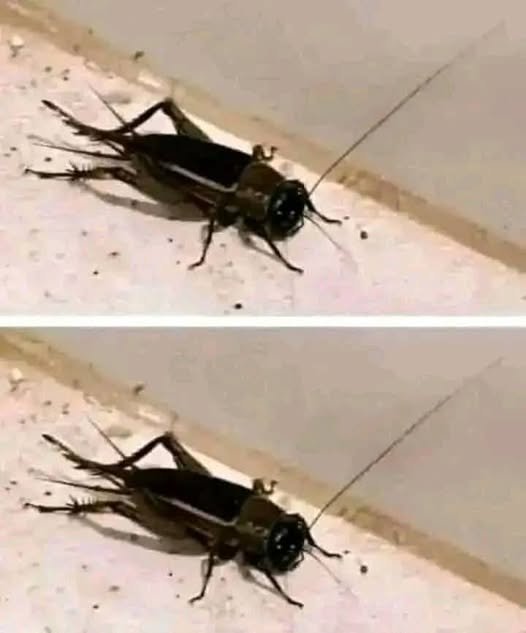
Most people barely notice crickets—until one suddenly appears inside the house, chirping loudly in a corner or hidden behind furniture. While it may seem like nothing more than an annoying sound, crickets have long been associated with symbolism, environmental messages, and natural signals. Across many cultures, a cricket inside the home carries meaning, and even modern perspectives echo the idea that its presence says something about the environment around you.
In this article, we explore what it means when a cricket enters your home, why it happens, and the subtle signs nature may be trying to tell you.
1. A Symbol of Good Luck in Many Cultures
For centuries, crickets have been seen as symbols of positivity and protection. In many traditions—including Native American, Asian, and even early European cultures—a cricket inside the home was considered a sign of good luck or new beginnings.
People believed that:
-
A cricket’s presence brought protection
-
Its song welcomed positive energy
-
It signaled the start of change or growth
While these are symbolic interpretations rather than scientific facts, many people still find comfort in these meanings. After all, nature often sends signs that remind us to slow down and pay attention.
2. A Natural Indicator of a Balanced Environment
From a modern perspective, a cricket entering your home may also reflect something simpler: your environment is healthy.
Crickets are naturally attracted to calm, safe, and comfortable spaces—and that includes homes that have:
-
Moderate temperatures
-
Low chemical odors
-
Quiet, peaceful corners
-
Stable humidity levels
If a cricket chooses your home, it may be a sign that your living space offers the exact environment it prefers. This can be interpreted as a natural compliment: your home is comfortable enough for wildlife to feel safe.
3. A Reminder of Seasonal Change
Crickets often come indoors during seasonal transitions, especially at the end of summer and early fall. Their presence can be a sign that:
